
Anyone who’s spent a January in Calgary knows the feeling: you swing your feet out of bed in the morning, they hit the floor, and the cold shoots straight up your legs. With our long, frigid winters and that bone-dry prairie air, the flooring under your feet makes a real difference, to how warm your home feels, how comfortable it is, and even your heating bills. If you’re renovating or building, picking the best flooring for Calgary winters is one of those choices you’ll feel every single cold morning. So let’s look at which options actually keep a home warm and cozy when it’s minus-thirty outside.
What Makes Flooring “Warm” in the First Place?
Before the options, it helps to know what you’re actually looking for. A floor feels warm (or doesn’t) based on a few things:
- How it handles temperature underfoot. Some materials conduct cold readily (tile, stone), while others insulate and feel warmer to the touch (carpet, cork, vinyl).
- Whether it works with in-floor heating. Radiant heat is a game-changer in Calgary, and some floors pair with it far better than others.
- How it copes with our dry climate. Calgary’s low humidity and big temperature swings, hello, chinooks, are hard on certain materials, which matters for both comfort and longevity.
Keep those three in mind and the right choice for your home gets a lot clearer.
The Warmest, Most Comfortable Flooring Options
1. Luxury Vinyl Plank (LVP)
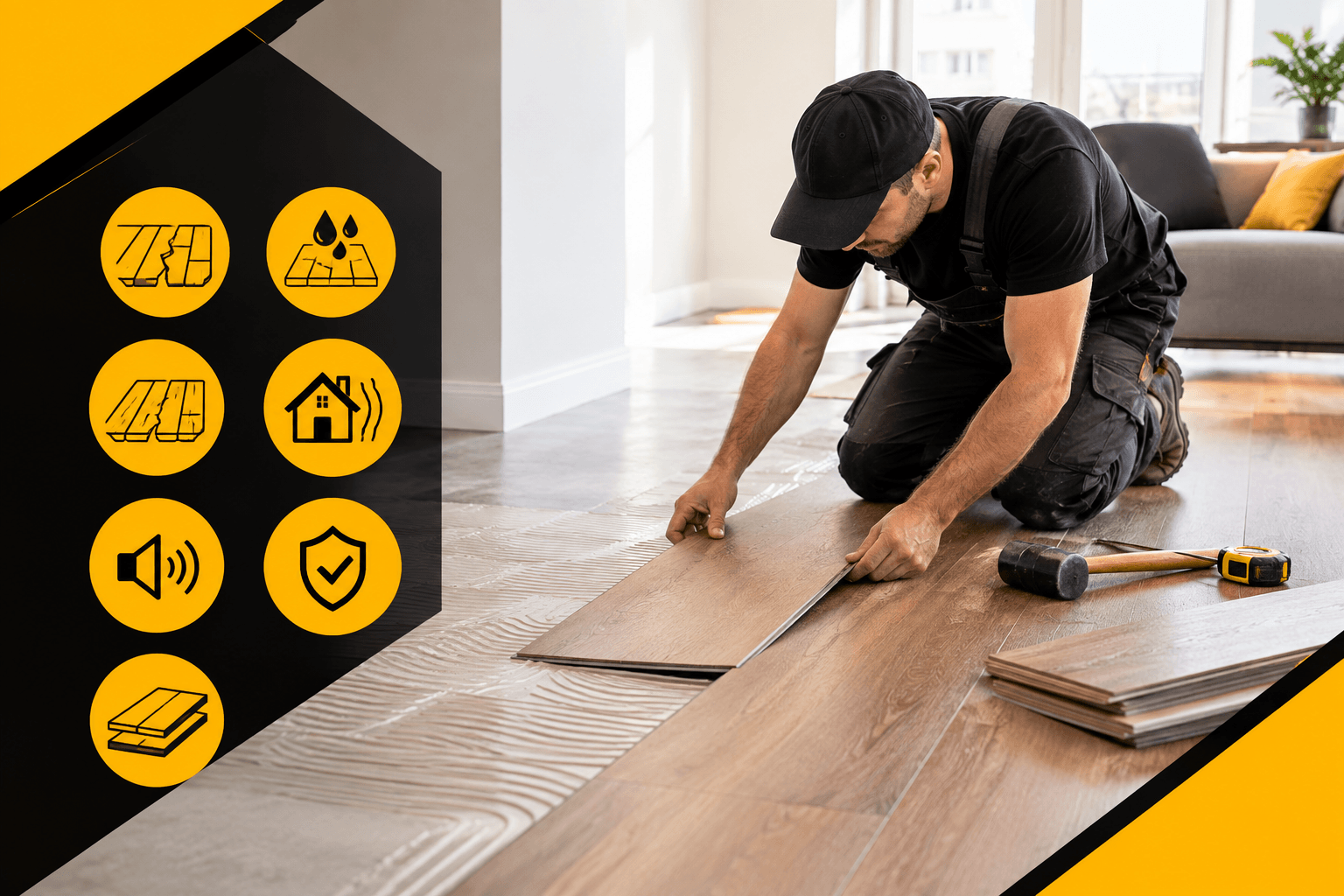
LVP has become a go-to in Calgary homes, and for good reason. It feels warmer underfoot than tile, it’s completely waterproof (great for entryways and snowy-boot season), it’s tough enough for busy households, and it pairs well with in-floor heating. Add a quality underlay and it’s even cozier. If you want one versatile all-rounder for a cold climate, this is often it.
2. Engineered hardwood
Want the warmth and classic look of real wood? Engineered hardwood is the smarter pick for Calgary over solid hardwood. Its layered construction stands up far better to our dry air and temperature swings, which can make solid planks gap, cup, or crack. You get that timeless wood feel with much better stability, and many engineered products can work with radiant heating when installed correctly.
3. Carpet
Nothing beats carpet for sheer warmth and softness underfoot. It’s a natural insulator, it takes the chill off a room, and it’s wonderfully cozy for bedrooms, basements, and family spaces where comfort trumps everything. Paired with a good underpad, carpet is one of the warmest floors you can stand on in January.
4. Cork
A bit of an underdog, but cork is a genuinely warm, soft, naturally insulating floor. It has a little give underfoot, it’s quiet, and it holds warmth well, a comfortable and eco-friendly option worth considering for living areas.
5. Laminate
If budget is front of mind, laminate gives you a warm-enough, wood-look floor at a friendly price, especially with a good insulating underlay beneath it. It’s a practical middle-ground choice for many rooms.
6. Tile, with one big caveat
On its own, tile is the coldest option on this list, that icy-underfoot feeling. But pair it with in-floor heating and it flips completely: tile is the ideal surface for radiant heat, soaking it up and radiating it back. That’s exactly why heated tile is so popular in Calgary bathrooms and entryways. Just don’t lay cold tile in a high-traffic living space without that heat beneath it.
The Real Secret: In-Floor Radiant Heating
If warmth is your priority, in-floor heating is the upgrade that changes everything. Instead of relying on the material alone, you’re warming the floor itself, so even tile becomes a pleasure to walk on. Tile and LVP are excellent partners for radiant heat, and many engineered hardwoods and laminates work with it too when they’re rated for it and installed properly. The one rule: always confirm a specific product is compatible with in-floor heating before you buy, because not every floor is.
Don’t Overlook the Underlay and Subfloor
Here’s something a lot of homeowners miss: the layers you can’t see matter as much as the floor you can. A quality insulating underlay adds warmth and comfort under almost any floating floor. And if you’re flooring a basement, you’re dealing with cold concrete, so the right moisture barrier and insulating underlay (or a subfloor system) make a huge difference in how warm that space actually feels. Skimp here and even a good floor will feel colder than it should.
A Note on Calgary’s Dry Climate
This is where local knowledge pays off. Calgary is dry, and our temperatures can swing wildly, a chinook can send things above freezing in the middle of winter. Those humidity and temperature shifts are tough on natural wood, which expands and contracts with them; it’s why solid hardwood can develop gaps or warp here if it isn’t handled carefully. More stable options like engineered hardwood and LVP tend to be happier in our climate, and proper acclimation of the material before installation is essential no matter what you choose. It’s one more reason the right installation is just as important as the right floor.
Get the Install Right, Not Just the Floor
Even the perfect flooring will underperform if it’s installed poorly, think gaps, cold spots, moisture problems, or a heated floor that was never set up properly. Acclimating the material, prepping the subfloor, adding the right underlay and moisture barriers, and integrating in-floor heating correctly are what turn a good product into a warm, comfortable, long-lasting floor. That’s where experienced flooring contractors in Calgary earn their keep, they know what our winters demand and install for them.
Warm Up Your Home This Winter
Not sure which floor is right for your home and your winters? Urban Flooring Solutions helps Calgary homeowners choose and install flooring built for comfort and our climate. Book a free consultation today.
Frequently Asked Questions
What is the warmest flooring for a cold climate like Calgary?
Carpet is the warmest and softest underfoot, making it ideal for bedrooms and basements. For hard-surface floors, luxury vinyl plank and cork feel warmer than tile or stone. And any floor paired with in-floor radiant heating becomes warm and comfortable, even tile, which is otherwise the coldest option.
Is engineered hardwood better than solid hardwood in Calgary?
Generally, yes. Calgary’s dry air and big temperature swings can cause solid hardwood to gap, cup, or crack. Engineered hardwood’s layered construction is more dimensionally stable, so it handles our climate better while still giving you a real-wood look and feel. Proper acclimation before installation is important either way.
Can I use tile flooring in a Calgary home?
Yes, but it’s best paired with in-floor heating. Tile is cold underfoot on its own, which isn’t ideal in a living space during winter. Over radiant heat, however, tile is excellent, it absorbs and radiates the warmth beautifully, which is why heated tile is so popular in Calgary bathrooms and entryways.
Does flooring really affect how warm my home feels?
It does. The material underfoot affects how warm a room feels and how comfortable it is to walk on, and the underlay and subfloor beneath it add insulation. The right combination, especially with in-floor heating, can make a noticeable difference to comfort and to how hard your heating system has to work.
Which flooring works best with in-floor heating?
Tile and luxury vinyl plank are excellent choices for radiant in-floor heating, and many engineered hardwoods and laminates are compatible when rated for it. Always confirm that a specific product is approved for in-floor heating before purchasing, and have it installed by a professional to get the best, safest results.
continue reading
Related Posts
New floors can transform a home or business — but

When it comes to flooring, there are few materials that